Spring Pruning Guide: What to Cut Now, What to Wait On, and Why It Matters
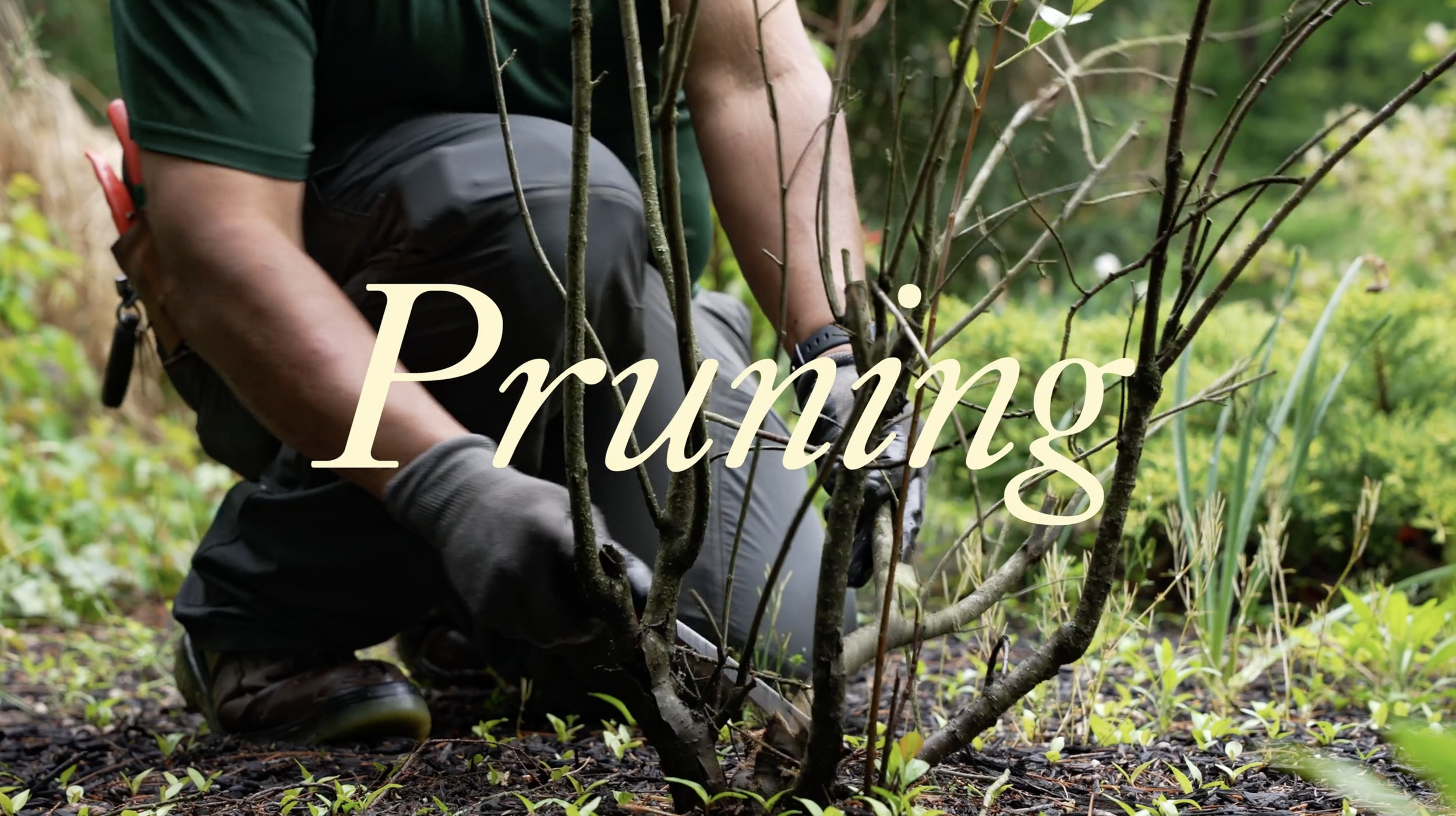
Late winter and early spring is prime pruning season in Metrowest, but not every plant in your landscape wants the same treatment at the same time. Here's how we think about it.
In This Guide
- Why We Prune in Late Winter and Early Spring
- Small Trees and Ornamentals to Prune Now
- Native Shrubs That Favor Late Winter and Early Spring Pruning
- Plants to Leave Alone Right Now
- The Nuanced Cases
- Hard Pruning: When and Why to Take It Back
- Edible Plants: Pruning for Production
- Other Common Landscape Plants
- Quick Reference: When to Prune What
- A Final Note on Timing
Why We Prune in Late Winter and Early Spring
There's a reason pruning season starts before the growing season does. When trees and shrubs are still dormant (typically late February through mid-April here in the Metrowest, depending on the year), they're not actively pushing energy into leaves and flowers. That means the plant can direct all of its resources toward healing cuts and fueling strong new growth once spring arrives.
There are practical advantages too. Without foliage, you can actually see the full structure of a tree or shrub: crossing branches, dead wood, and the overall shape all become obvious. And because most fungal diseases and insect pests are also dormant, fresh pruning wounds face much lower risk of infection.
It's worth noting that the window shifts from year to year. Some seasons, we're pruning in February. Others (like this year, when two feet of snow stuck around through March), the real work doesn't start until late March and runs well into April. The calendar gives you a starting point, but conditions on the ground determine the actual window.
That said, timing isn't one-size-fits-all. Some plants thrive with a dormant-season cut. Others will punish you for it, either by bleeding sap, skipping a season of bloom, or struggling through the rest of the year. Let's walk through who gets cut now, who waits, and the nuanced cases in between.
Learn more about our pruning services
Small Trees and Ornamentals to Prune Now
Late winter through early spring is an ideal window for pruning the small trees and ornamentals that anchor most Metrowest landscapes. These are the trees we work with regularly, and dormant pruning sets them up for their best season of growth and flowering.
Fruit Trees: Apples, Pears, and Stone Fruits
Dormant pruning is essential for fruit trees. For apples and pears, late winter through early spring is the time to shape the canopy, remove crossing branches, and open up the interior so light and air can reach developing fruit. The goal is structure: a well-pruned apple tree shouldn't have branches competing for the same space.
Stone fruits like cherries and plums also benefit from dormant pruning, though cherries in particular should be pruned a bit later (closer to bud break) to reduce the risk of bacterial canker. With all fruit trees, focus on removing dead or diseased wood first, then thin to maintain an open framework that will support this year's crop.
Crabapples
Crabapples are one of the most common ornamental trees in our area, and the dormant season is the right time to address their structure. Focus on removing water sprouts (those vigorous vertical shoots), crossing branches, and any dead wood. A well-pruned crabapple should have an open, airy canopy that shows off its spring bloom and reduces disease pressure through better air circulation.
Flowering Cherries
Ornamental cherries, from weeping Higan varieties to upright Kwanzan types, benefit from light structural pruning in late winter or early spring. Remove dead or rubbing branches, and thin to maintain their natural form. These trees don't need heavy pruning; the goal is to preserve their graceful shape, not reshape them.
Serviceberry (Amelanchier)
Serviceberries are a standout native, equally at home as a multi-stem specimen or a small single-trunk tree. Late winter through early spring is the time to remove any dead, crossing, or inward-growing branches. For multi-stem forms, you can also thin out the weakest stems at the base to keep the clump open and vigorous. The shadblow serviceberry (A. canadensis) and Allegheny serviceberry (A. laevis) are both common in our region and respond well to this approach.
Eastern Redbud (Cercis canadensis)
Redbud has become enormously popular in New England, with dozens of cultivars now available from local nurseries. Prune during dormancy, focusing on structural shaping and deadwood removal. Younger trees especially benefit from early training to establish a strong branch framework. Since redbuds bloom on old wood, you'll sacrifice a small amount of flower buds on any branches you remove, but the structural benefit is worth it for the long-term health of the tree.
A Note on Larger Trees
Many large shade trees (oaks, elms, hornbeams, sweetgums) also prune best during dormancy. However, work on large trees should be handled by a certified arborist with the proper training, equipment, and insurance. If you have mature trees that need attention, we're happy to recommend arborists we trust in the Metrowest area.
A few timing notes worth knowing: maples and birches push sap aggressively as temperatures warm, and pruning during this period causes heavy "bleeding" from cut sites. While this is mostly cosmetic, it's better to prune these in late spring after the leaves are fully out. Flowering dogwoods (Cornus florida) are best pruned after their spring bloom, though light structural work during dormancy is fine. Pagoda dogwoods (Cornus alternifolia) and kousa dogwoods (Cornus kousa) both tolerate dormant-season pruning well.
Pruning is a key part of our spring cleanup service
Native Shrubs That Favor Late Winter and Early Spring Pruning
The rule of thumb for shrubs: if it blooms on new wood (growth produced in the current season), you can prune it during dormancy without sacrificing flowers. The plant will push new growth in spring and flower on that fresh wood in summer. Many of our favorite native shrubs fall into this category.
Smooth Hydrangea (Hydrangea arborescens)
This is one of the most forgiving shrubs you can prune. Smooth hydrangea blooms entirely on new wood, so you can cut it back hard in late winter or early spring and expect a full flower display by midsummer. The classic 'Annabelle' and the sturdier 'Incrediball' are everywhere in our area. We're also fans of 'Haas' Halo,' a lacecap form that produces nectar-rich fertile flowers, making it significantly more valuable for pollinators than the all-sterile cultivars.
Summersweet (Clethra alnifolia)
Summersweet blooms on new wood in midsummer with fragrant flower spikes that are magnets for pollinators. Prune during dormancy to control size and shape. Cultivars like 'Hummingbird' (compact), 'Ruby Spice' (pink flowers), and 'Sixteen Candles' are all widely available and respond well to late winter or early spring pruning.
Virginia Sweetspire (Itea virginica)
Sweetspire blooms on new wood and can be cut back during dormancy to maintain a tidy form. 'Henry's Garnet' is the most common cultivar, prized for its long racemes of white flowers and deep red-purple fall foliage. It spreads by suckers, so late winter or early spring is also a good time to control its footprint by removing unwanted stems at the base.
Red Osier Dogwood (Cornus sericea)
Here's a case where pruning strategy is about aesthetics as much as plant health. Red osier dogwood is prized for its brilliant red winter stems, but that intense color only appears on young wood. Older stems gradually fade to a dull grayish-brown.
The approach we use is selective thinning: each late winter or early spring, remove roughly one-third of the oldest, thickest stems at the base. This promotes a constant rotation of fresh, brightly colored growth while keeping the plant full and healthy. You're never taking the whole plant down, just cycling out the oldest third so the display stays vibrant year after year. The same principle applies to yellowtwig dogwood ('Flaviramea') and the compact 'Arctic Fire' cultivar.
Ninebark (Physocarpus opulifolius)
Ninebark is a tough, adaptable native that blooms on new wood. The dormant season is the time to thin out old stems and reduce size if needed. Popular cultivars like 'Diablo,' 'Summer Wine,' and the compact 'Tiny Wine' all handle pruning well. For overgrown plants, ninebark responds vigorously to hard rejuvenation cuts.
Bush Honeysuckle (Diervilla lonicera)
A wonderful but underused native shrub, bush honeysuckle blooms on new wood and can be cut back during dormancy. 'Copper' is the most common cultivar, valued for its coppery-orange new foliage and yellow summer flowers. Despite the name, this is a true native and has no relation to the invasive honeysuckles (Lonicera) that plague New England woodlands.
Elderberry (Sambucus canadensis)
American elderberry produces its large flower clusters on new growth, so late winter or early spring pruning works well. Remove the oldest canes at the base, thin for air circulation, and cut back remaining stems to encourage vigorous new growth. If the plant has gotten unruly, elderberry tolerates hard rejuvenation cuts.
Buttonbush (Cephalanthus occidentalis)
Buttonbush blooms on new wood and can be pruned hard during dormancy. Its spherical white flower heads are among the best native nectar sources for pollinators, and a good pruning encourages the strong new growth that produces the heaviest bloom.
American Hazelnut (Corylus americana)
Hazelnut produces its catkins on old wood, but the shrub benefits from dormant-season thinning to maintain an open, productive form. Remove the oldest stems at the base and thin interior growth to improve light penetration and nut production. This native shrub is increasingly popular in both ecological and edible landscapes.
Plants to Leave Alone Right Now
Not every plant benefits from a dormant-season cut. Some have biological reasons to wait, and others will skip a year of flowering if you time it wrong.
Spring-Blooming Shrubs That Set Buds on Old Wood
These shrubs formed their flower buds last season. Those buds have been sitting on the plant all winter, waiting for spring warmth to open. If you prune now, you're physically cutting off this year's flowers. The right approach for most of these is to prune immediately after flowering in spring.
Viburnums: Both native and non-native viburnums are old wood bloomers. Native species like arrowwood (V. dentatum), nannyberry (V. lentago), blackhaw (V. prunifolium), and American cranberrybush (V. trilobum) should all wait until after flowering. The same goes for popular non-natives like doublefile viburnum and Koreanspice viburnum.
Witch Hazel (Hamamelis): Both the native common witch hazel (H. virginiana) and hybrid cultivars like 'Arnold Promise' and 'Jelena' bloom on old wood. Since witch hazels are often among the first plants to bloom (sometimes as early as February), their pruning window comes shortly after those early flowers fade.
Mountain Laurel (Kalmia latifolia): This native evergreen sets buds on old wood. Prune after bloom if needed, though mountain laurel generally requires very little pruning beyond removing dead branches.
Spicebush (Lindera benzoin): A native woodland shrub that blooms early on old wood, spicebush should be left alone until after its small yellow flowers fade in spring. It rarely needs much pruning; just remove any dead or crossing branches.
Forsythia: Prune right after the yellow flowers fade in spring. Forsythia grows aggressively, so this is often the time to thin out the oldest canes and reduce height. Hard rejuvenation is an option for overgrown specimens.
Oakleaf Hydrangea (Hydrangea quercifolia)
Unlike smooth and panicle hydrangeas, oakleaf hydrangeas bloom on old wood. They're a native species with incredible multi-season interest: white panicle flowers in summer, burgundy fall foliage, and peeling bark in winter. Cultivars like 'Snow Queen,' 'Ruby Slippers,' and the compact 'Pee Wee' are all readily available. Prune after flowering if needed, but oakleaf hydrangeas generally require very little pruning.
Bigleaf and Lacecap Hydrangeas (Hydrangea macrophylla)
The classic mophead and lacecap hydrangeas also bloom on old wood, which is the main reason so many homeowners accidentally eliminate their blooms with a dormant-season cut. If you have these, prune only after flowering and limit cuts to deadheading and removing the weakest stems.
One caveat: newer reblooming cultivars like the Endless Summer series and 'Twist-n-Shout' bloom on both old and new wood, so they're more forgiving. But if you're not sure which type you have, the safest bet is to wait.
The Nuanced Cases
Not everything falls neatly into "prune now" or "wait." Some plants can be pruned in late winter or early spring, but with tradeoffs you should understand before reaching for the shears.
Rhododendrons
Rhododendrons are a prime example of a nuanced pruning decision. You can prune them during dormancy; they tolerate it well and will push new growth readily. But the flower buds are already formed and sitting conspicuously at the branch tips. If you cut now, you're removing some or all of this spring's flowers.
Sometimes that's absolutely the right call. An overgrown rhododendron that's gotten leggy and bare at the base may need structural pruning more than it needs one season of flowers. We regularly hard prune rhododendrons with great success, and they respond well to significant cuts (even back to bare wood), pushing vigorous new growth from dormant buds along the stems. But if your plant is in good shape and you're just doing maintenance, wait until right after bloom. Deadheading spent flower trusses after bloom also helps direct the plant's energy into next year's buds.
Lilacs (Syringa)
Lilacs are more flexible than most people realize. Yes, they bloom on old wood, and a heavy pruning in late winter will reduce this year's flower display. But on a mature, established lilac with plenty of stems, thinning cuts during the dormant season do very little to hinder the overall show. The plant has so many stems and so many buds that removing some for structural improvement is a worthwhile tradeoff.
The approach we take on established lilacs: use the dormant season to thin out the oldest, thickest trunks at the base, remove interior suckers that are crowding the plant, and take out any crossing or weak growth. This kind of structural work is actually easier during dormancy because you can see the full framework without foliage in the way. Most of the remaining stems will still be loaded with flower buds.
Where timing matters more is with young or immature lilacs that don't have a lot of growth to spare. For these, pruning immediately after flowering gives the plant the best chance to put its energy toward building more stems and setting next year's buds. Neglected lilacs that need a full rejuvenation can be cut back hard over two to three years, either during dormancy or right after bloom.
Azaleas
Like rhododendrons (they're closely related), most azaleas in our Metrowest landscapes are cultivated hybrids that bloom on old wood. The same logic applies: dormant-season pruning is physiologically fine but will cost you flowers. Prune immediately after bloom for the best of both worlds. The nursery trade carries an enormous range of azalea cultivars, from Encore rebloomers to native species like swamp azalea (Azalea viscosum) and pinxterbloom (Azalea periclymenoides). All follow the same general rule: prune after flowering unless rejuvenation is the priority.
Japanese Maple (Acer palmatum)
Japanese maples are the most popular ornamental tree in the regional nursery trade, and their pruning timing requires some care. Like all maples, they will bleed sap if pruned during the period when sap pressure is rising (typically March through early April in our area). The bleeding is mostly cosmetic and won't kill the tree, but it can attract insects and create entry points for fungal infection.
The best window for structural pruning is mid-winter (January through February) while the tree is fully dormant and before sap begins to move. If you've missed that window, the next good opportunity is late spring after the leaves have fully emerged and sap pressure has normalized (typically May). For fine pruning and shaping, late spring through summer is actually preferred because you can see how the canopy is filling out. Focus on removing crossing branches, dead wood, and any growth that obscures the tree's natural layered structure. Less is more with these trees; the goal is to reveal their form, not reshape it.
Red Osier Dogwood and Other Colored-Stem Shrubs
We covered red osier dogwood in the "prune now" section above, but it's worth highlighting the technique here because it applies to several colored-stem shrubs. The one-third rotation method (removing the oldest third of stems at the base each year) keeps the display vibrant without sacrificing the plant's overall fullness. This works for red osier dogwood, yellowtwig dogwood, and the compact 'Arctic Fire' cultivar. Late winter through early spring, while the colored stems are still on display, is the natural time to evaluate which ones need to go.
Hard Pruning: When and Why to Take It Back
Sometimes a light trim isn't enough. Hard pruning (also called rejuvenation pruning) involves cutting a shrub back severely, often to within 6 to 12 inches of the ground, to stimulate entirely new growth from the base. It sounds aggressive, and it is. But for the right plants in the right situation, it's the best path to a healthy, well-shaped specimen.
When Hard Pruning Makes Sense
Hard pruning is most useful when a shrub has become overgrown, leggy, or is flowering only at the tips of long, bare branches. The interior is sparse and woody, new growth is weak, and the plant has lost the form it once had. Rather than trying to fix this incrementally (which often takes years and produces awkward results), a hard rejuvenation cut lets the plant essentially start over.
Late winter through early spring is the ideal time for hard pruning because the plant has stored energy in its root system and will push vigorous new growth as temperatures warm. The key is that the plant needs to be a species that responds to hard cutting by producing basal growth.
Good Candidates for Hard Pruning
Smooth hydrangeas (H. arborescens) can be cut to the ground every year and will flower the same season. Red osier dogwood responds vigorously from the base. Summersweet, elderberry, ninebark, and buttonbush all tolerate hard rejuvenation cuts well.
Rhododendrons are also strong candidates for hard pruning. We regularly take overgrown rhododendrons back to bare wood, and they push new growth from dormant buds along the stems reliably. For very large specimens, a staged approach (cutting back one-third of the plant each year over three years) can minimize the visual impact while still achieving the rejuvenation.
Among non-natives, yews (Taxus) are exceptional. They'll regenerate from old wood, making them one of the few evergreens you can hard prune successfully. Forsythia and lilacs can also be rejuvenated with a hard cut, though you'll sacrifice one to two seasons of bloom.
Plants That Don't Recover From Hard Pruning
Not all woody plants can handle being cut to the ground. Most conifers (arborvitae, juniper, spruce, and pine) will not regenerate from old wood. If you cut past the green growth into bare branches, those branches typically stay bare. This is especially important to know with arborvitae, since they're so commonly used as privacy screens and hedges.
Our team can assess which approach is right for your specific plants
Edible Plants: Pruning for Production
If you're growing fruit in your landscape, late winter and early spring pruning isn't optional. It's the single most important thing you can do to maximize your harvest.
Blueberries (Vaccinium)
Blueberries are both a native plant and a productive edible, making them a perfect fit for ecological landscapes. Young plants (under three years) need minimal pruning; just remove dead branches and weak, spindly growth. Once established, annual dormant-season pruning keeps them productive. The approach is to remove the oldest, thickest canes at the base (they produce smaller, lower-quality fruit), thin remaining canes so the bush isn't crowded, and remove low-growing branches that will droop to the ground under the weight of fruit.
Grapes
Grapes require aggressive annual pruning during dormancy, and the timing matters. Prune too early and severe cold can damage the exposed cuts; too late and the vines will "bleed" sap heavily. Late February through mid-March (before bud swell) is the sweet spot in our area, though this shifts with the season. Grape pruning is its own discipline, but the basic principle is to select the strongest canes from last year's growth and remove everything else. An unpruned grape vine will produce plenty of foliage but very little quality fruit.
Raspberries
Raspberry pruning depends on whether you're growing summer-bearing or everbearing varieties. For summer-bearing types, remove the canes that fruited last year (they're done) and thin the new canes that will produce this season. For everbearing varieties, you have the option of cutting the entire patch to the ground in late winter for a single, heavy fall crop, or selectively removing only the spent cane tips for both a summer and fall harvest.
Other Common Landscape Plants
Metrowest yards are a mix of native and non-native plants. Here are pruning notes for some of the most common non-native shrubs and hedging plants you'll encounter.
Panicle Hydrangeas (Hydrangea paniculata)
These are among the most popular landscape shrubs in our region, with cultivars like 'Limelight,' 'Bobo,' 'Quick Fire,' and 'Little Lime' available in seemingly every nursery and garden center. The good news: they bloom on new wood, so dormant-season pruning is ideal. Remove about a third of the old wood, cut back to strong outward-facing buds, and thin anything thinner than a pencil.
Yews (Taxus)
Yews are remarkably tolerant of pruning and can be shaped in late winter or early spring before new growth begins. They're one of the few evergreens that will regenerate from old wood, which makes them forgiving if you need to take them back significantly. For formal hedges and foundation plantings, dormant-season shaping followed by a lighter trim in midsummer keeps them dense and tidy.
Boxwood (Buxus)
Light shaping can be done in late winter or early spring. Heavier pruning should wait until after the first growth flush in late spring. Boxwoods are slow to recover from aggressive cuts, so work gradually. Thin selectively rather than shearing, which creates a dense outer shell and dead interior.
Arborvitae (Thuja occidentalis)
Despite being a New England native, arborvitae are included here because they're most often used as cultivated hedges and screens rather than in ecological plantings. Prune in late winter to early spring for light shaping only. Never cut into bare wood; arborvitae will not regenerate from branches that have no green foliage. Use thinning cuts to maintain density rather than shearing.
Rose of Sharon (Hibiscus syriacus)
Rose of Sharon blooms on new wood and benefits from dormant-season pruning. Cut back the previous year's growth to two or three buds per stem for larger flowers, or prune less aggressively for a bushier plant with more (smaller) blooms.
Weigela
Weigela blooms primarily on old wood, so major pruning should happen right after flowering in late spring. However, if you have a reblooming variety like the 'Sonic Bloom' series, light dormant-season pruning is fine since they'll produce flowers on new growth as well.
A Note on Invasive Plants in the Landscape
Some of the most common landscape shrubs in our area are actually classified as invasive species in Massachusetts. Burning bush (Euonymus alatus) and Japanese barberry (Berberis thunbergii) are two of the biggest offenders. While these can technically be pruned during dormancy, we encourage homeowners to consider replacing them with native alternatives that provide similar value. Highbush blueberry, fothergilla, aronia, and Virginia sweetspire all offer comparable or superior fall color without the ecological damage.
Learn about our approach to managing invasive plants and transitioning to native alternatives
Quick Reference: When to Prune What
| Plant | Best Pruning Window | Blooms On |
|---|---|---|
| Smooth hydrangea | Late winter / early spring | New wood |
| Summersweet (Clethra) | Late winter / early spring | New wood |
| Virginia sweetspire (Itea) | Late winter / early spring | New wood |
| Red osier dogwood | Late winter / early spring (1/3 thinning) | New wood |
| Ninebark | Late winter / early spring | New wood |
| Bush honeysuckle (Diervilla) | Late winter / early spring | New wood |
| Elderberry | Late winter / early spring | New wood |
| Buttonbush | Late winter / early spring | New wood |
| American hazelnut | Late winter / early spring | Old wood (catkins) |
| Serviceberry | Late winter / early spring | N/A |
| Eastern redbud | Late winter / early spring | Old wood* |
| Blueberries | Late winter / early spring | New wood |
| Grapes | Late winter (before bud swell) | New wood |
| Raspberries | Late winter / early spring | Varies by type |
| Apple and pear trees | Late winter / early spring | New wood |
| Crabapples | Late winter / early spring | N/A |
| Flowering cherries | Late winter / early spring | Old wood* |
| Panicle hydrangea | Late winter / early spring | New wood |
| Yews | Late winter / early spring | N/A (evergreen) |
| Boxwood | Late winter (light only) | N/A (evergreen) |
| Rose of Sharon | Late winter / early spring | New wood |
| Lilacs (established) | Dormant season or after bloom | Old wood |
| Lilacs (young) | After bloom | Old wood |
| Japanese maple | Mid-winter or late spring | N/A |
| Oakleaf hydrangea | After bloom | Old wood |
| Bigleaf hydrangea | After bloom | Old wood |
| Viburnums | After bloom | Old wood |
| Witch hazel | After bloom | Old wood |
| Mountain laurel | After bloom | Old wood |
| Spicebush | After bloom | Old wood |
| Rhododendrons | After bloom (or dormant season**) | Old wood |
| Azaleas | After bloom (or dormant season**) | Old wood |
| Forsythia | After bloom | Old wood |
| Weigela | After bloom | Old wood |
| Maples and birches | Late spring / early summer | N/A |
| Arborvitae | Late winter (light only) | N/A (evergreen) |
* Blooms on old wood, but minor bud loss from structural pruning is acceptable.
** Dormant-season pruning is fine for plant health and rejuvenation, but will reduce or eliminate this season's flowers.
A Final Note on Timing
Pruning is as much about observation as technique. The dates on a calendar give you a starting point, but what matters more is what the plant is telling you. Are the buds swelling? Is the bark still tight? Has the ground thawed enough that root activity is starting? These cues vary year to year, and in a New England spring, week to week.
Every season is different. Some years we're pruning in February; this year, with snow on the ground into March, we'll be running pruning crews well into mid-April. The principles stay the same regardless of the calendar. Start with deadwood removal (which can be done anytime) and structural corrections on the plants you know are good dormant-season candidates. Save the spring bloomers and sap-heavy trees for later. And if you're unsure about a specific plant in your landscape, that's exactly the kind of question we're happy to help with.
Have questions about your landscape? Get in touch.
Explore our full range of ecological landscaping services